The B.S. in Design, Innovation, and Society at Rensselaer provides creative, socially conscious students with a broad education in design. This is not your typical design program.
Program Overview
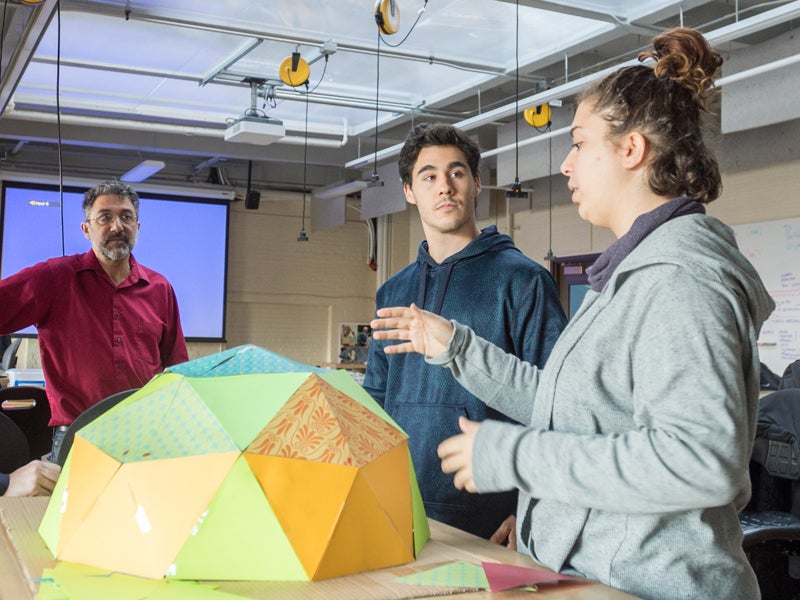
The B.S. in Design, Innovation, and Society (DIS) is a unique liberal arts-focused and studio-based design program:
- Design studios are complemented by a sequence of humanities and social sciences courses, which explore the social, environmental, political, legal, and cultural dimensions of design and technology in modern life.
- Through the integration of social and humanistic inquiry into a creative and technical studio-based curriculum, students learn how to use design to address real-world problems.
By examining the intersections among science, technology, design, and society, students develop a unique, well-rounded skill set in design work and critical thinking. DIS design experiences range over a breadth of problems from larger, systemic problems to smaller, focused problems. DIS provides all of the elements necessary to put students’ creativity to work as leaders of design and innovation to address big social and environmental challenges with creative approaches.
Program Outcomes
Students who graduate from this program will be able to:
- Formulate design problems that challenge conventional assumptions because they are based on social science
- Analyze and apply design methods that identify key factors (e.g., economic, technical, environmental, cultural, etc.) that shape problems and potential solutions
- Realize innovative design concepts through visual representations, physical prototypes, and user testing
- Collaborate with diverse stakeholders throughout the design process
- Write and present effectively about how they understand complex social problems and how those problems can be addressed through thoughtful, socially conscious design solutions
Community
-
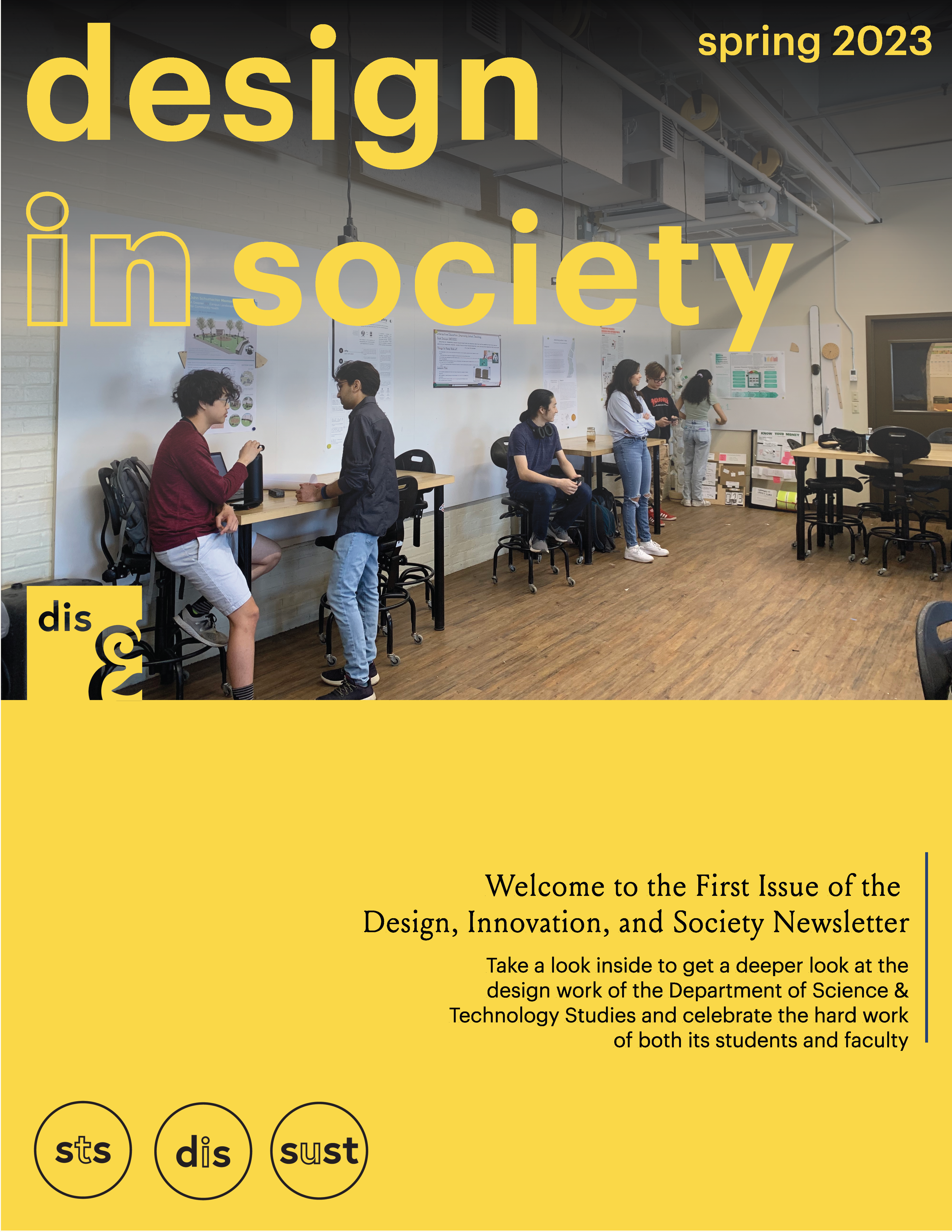
To learn more, read the Design in Society newsletter
-
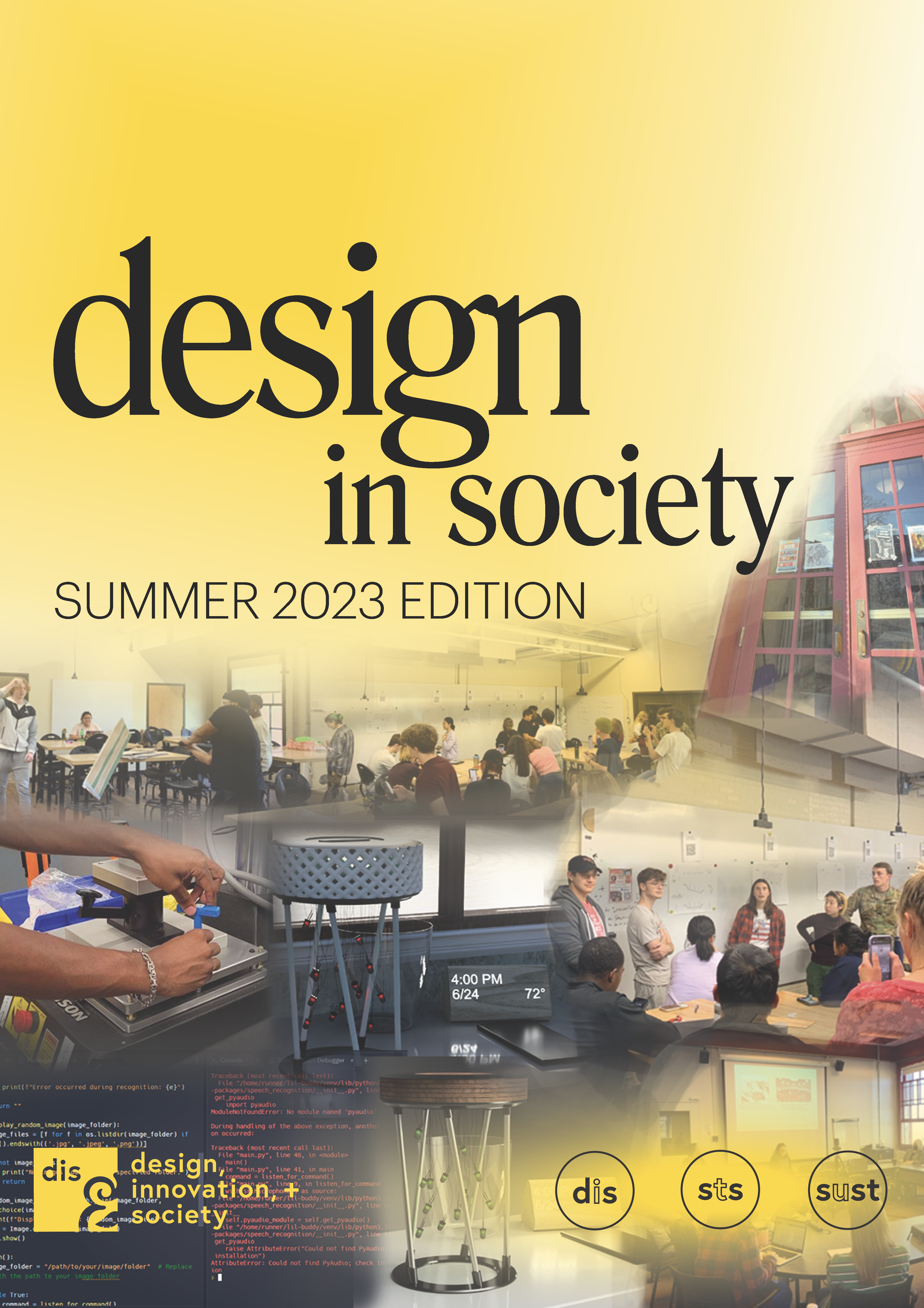
To learn more, read the Design in Society newsletter
Spotlight
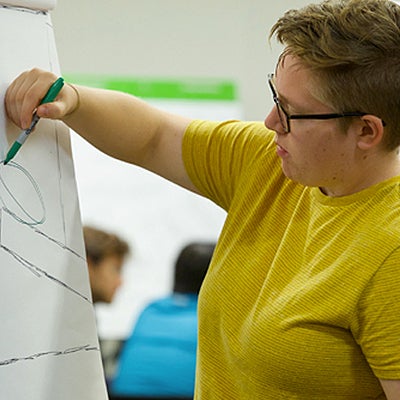
“Altruism is ingrained in me,” said Lydia Krauss, the daughter of two Presbyterian ministers. Her four years at Rensselaer Polytechnic Institute have certainly borne that out. She has developed numerous projects aimed at making life better and more accessible for others.
While these are lofty goals, Krauss said that pursuing a dual major in Design, Innovation, and Society (DIS) in the School of Humanities, Arts, and Social Sciences and Biomedical Engineering (BME) in the School of Engineering made her particularly effective at achieving them.
“Both my engineering and humanities educations have helped to develop distinct yet critical dimensions of my academic and personal self,” she said. “We are entering an era where individuals who can communicate and thrive across traditional professional divides are more and more critical.”
Krauss’ projects have included a toy — called “Braille Blocks” — designed to help children learn Braille, a custom prosthetic socket intended to help amputees hold and cut things like vegetables, and a door-opening device for people in wheelchairs.
Krauss was a finalist in the Health Hackathon at the Ichan School of Medicine at Mount Sinai in 2017. Her project, the “Helping Stand,” was a portable device to help fatigued patients stand to get out of a car. She also spent last summer interning in Berlin working for Amparo Prosthetics, a company co-founded by a Rensselaer graduate.
Community is important to Krauss. A native of Los Angeles, she said she had to adjust to life on the East Coast, where she found differences in culture and pace. “The way I coped with this challenge was to immerse myself in the family-like community that DIS forms,” she said.
After Graduation
- graduate studies in design, social sciences, engineering, environmental studies, and management
- industrial and product design
- product and design engineering
- design consultancies
- user-experience and social-innovation analysis
- nonprofits
- startup companies
- educational institutions
- government research agencies
- entrepreneurship in green industry and social ventures